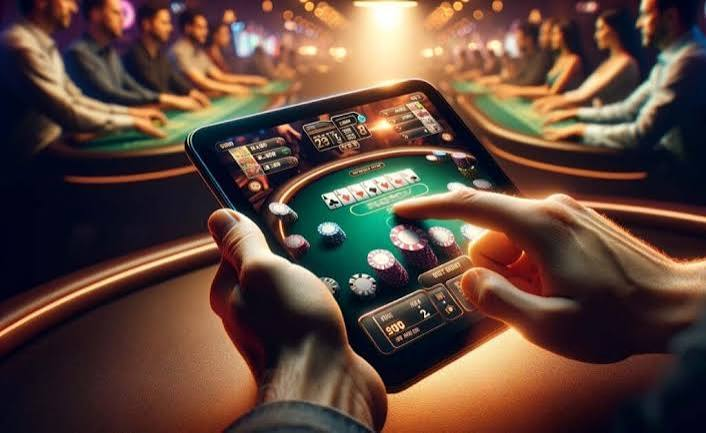

Table games feel more hands-on because they keep pulling the player back into the action. A slot spin asks for one input, then the screen takes over; a card or wheel game keeps pausing, waiting, and asking what happens next.
That does not mean the player controls the result. It means the route to that result feels less passive.
Table Games Refuse to Play Themselves
Press spin on a slot and, for a few seconds, your job is done. The reels move, the symbols land, and the game resolves everything behind the screen.
A table game is harder to ignore. Even a simple hand has a rhythm to it: place the bet, watch the deal, read the situation, then make another call.
The Rules Sit Out in the Open
Table games tend to show their workings more clearly. Cards have values, bets occupy visible spaces, and each action has an obvious consequence inside the round.
Slots are often more mysterious by design. You see the animation, but much of the real calculation is hidden underneath paylines, random number generation, and feature rules that rarely feel as immediate as a card placed in front of you.
Choice Creates Tension, Not Certainty
The strongest table-game decisions are often about managing an uncertain situation. In blackjack, standing on a total may be mathematically sensible, but the dealer can still draw exactly what you hoped not to see.
That is where the tension comes from. A decision can be reasonable, disciplined, and completely unsuccessful at the same time.
Slower Rounds Feel More Personal
Slots move quickly because there is little reason for them to stop. The result appears, the screen resets, and another spin is ready almost immediately.
Table Game leave awkward little gaps. A dealer turns a card, someone hesitates, chips stay on the layout, and the outcome seems to take its time arriving.
The Better Fit Comes Down to Attention
Some people want a game that gets out of the way. Slots suit that mood because the rules are usually easy to enter and the pace does not depend on constant judgment.
Others enjoy having something to read, consider, or second-guess. Table games do not offer more control over chance, but they do make the player feel more present while chance does its work.